Monday, April 21, 2014

Making the most of your entry-level job!

     Many top-level business executives, including some C.E.O.'s began their careers in entry-level positions!
These positions may not fulfill a post-grad's dream, but they are often great opportunities for freshly-minted graduates to learn about the given industry.
     Like many opportunities, entry-level jobs are often only as valuable as employees want them to be.
Those who approach entry-level opportunities with a good attitude, and a strong desire to learn are the ones who are most likely to someday consider their experiences as entry-level employees as invaluable.
With that in mind, the following are a few ways entry-level workers can make the most of their opportunity :

  • MAINTAIN A GOOD ATTITUDE
The chances are that your first few months as an entry-level employee will be spent performing some tedious tasks which may have only little to do with your long-term career goals.
Approaching these tasks with enthusiasm may be difficult, but do your best to maintain your positive attitude.
Your co-workers, and bosses will observe how you respond to your work-load, and that can dictate your future with the company.
In addition, those who are above you on the company "food-chain" have most likely performed some menial works when they began their careers too!
A poor attitude that suggests you are above menial works will harbour resentment amongst you, and those who've already done them.

  • BE READY TO "CHIP-IN"
A willingness to co-operate, and work a few extra hours when help is needed is a great way for entry-level employees to get noticed!
Helping co-workers is excellent, but make certain that your own responsibilities aren't suffering because you've been too quick to lend your helping hands.
Once you have "cleared your plate", then approach your boss about helping the others.
This good gesture will get you noticed. 

  • LEARN THE "LAY OF THE LAND"
The companies vary in regards to the culture, especially offices. 
A casual environment may have prevailed at your past internship, but that doesn't necessarily mean your new employer accepts the same.
When  beginning a new entry-level job, give your attention to how the staff interacts with one another, and how decisions are made.
Information such as this will help you to advance in your career, and build good relationships within the company.

  • DEVELOP YOUR SKILLS
Not everyone will expect you to be fully satisfied with an entry-level position for your entire career, so don't be afraid to seek opportunities to further develop your skills.
These opportunities may present themselves within the company via an interesting project, or outside the company via a class at the local college.
Please do take advantage of any chance to develop your skills.
Don't feel guilty about pursuing opportunities that have only little to do with your current position, as long as you're still doing your current job to the best of your abilities.
A good company will be impressed by your desire to learn, and grow your skill-set, so don't hesitate to seek these opportunities.


                                                                                  from : The Government of Ontario


Sunday, March 23, 2014

The ten most unhelpful thinking styles.

1 . All of nothing thinking : Sometimes called "black & white thinking".

  • If I'm not perfect, I have failed
  • Either I do it right, or not at all
2 . Mental filter : Only paying attention to certain types of evidence.

  • Noticing our failures, but not seeing our successes
3 . Jumping to conclusions : There are two key types of jumping to conclusions -

  • Mind reading (imagining we know what others are thinking)
  • Fortune telling (predicting the future)
4 . Emotional reasoning : Assuming that because we feel a certain way, what we think must be true.

  • I feel embarrassed, so I must be an idiot
5 . Labeling : Assigning labels to ourselves, or other people.

  • I'm a loser
  • I'm absolutely useless
  • They are such idiots
6 . Over-generalizing : Accepting a definite pattern based upon a single event, or being overtly "broad" in the conclusions we draw.

  • everything I do is always rubbish
  • nothing good ever happens to me
7 . Disqualifying the good (positive) : Disqualifying the good things that are happening, or the good things that you have done in your past.

  • That doesn't count anymore
8 . Magnification (catastrophicizing & minimizing) : Blowing things out of proportion (catastrophicizing), or inappropriately shrinking things to make them seem less important (minimizing).

9 . Using critical words : Using critical words like "should", "must", or "ought" may make us feel guilty, or that we have already failed. e . g. When we apply "shoulds" to other people, the result is often frustration

10 . Personalizing : Blaming yourself. Taking the responsibility for something that wasn't completely your fault.
Also, blaming other people for something that was your fault.


Saturday, January 25, 2014

Good work habits, skills, and abilities!


It is very important for everyone in the workforce to have good work habits, skills, and abilities!
Some of these are :

Working safely

  • Working in a manner that prevents injury to self, and others
  • Reporting unsafe working conditions
  • Participating in health & safety training as required
  • Using and wearing all the required protective equipment, and devices
Teamwork
  • Working willingly with others
  • Showing respect for the ideas, and opinions of others
  • Taking responsibility for his / her load of the work
  • Contributing to the team's efforts via sharing information, resources, and expertise
Reliability
  • Being punctual
  • Following directions correctly
  • Giving attention to details
  • Using the time effectively, and getting the work done "on - time"
  • Working in accordance with the health & safety practices
Organization
  • Organizing work priorities when faced with many tasks
  • Devising, and following a thorough plan to complete the tasks
  • Revising the plan when it's necessary to complete tasks, or make improvements
Working independently
  • Accomplishing tasks independently
  • Independently selecting, evaluating, and using the appropriate tools, resources, and actions
  • Using prior knowledge, and experiences to correctly solve problems, and make good decisions
Initiative
  • Beginning, and completing tasks with little, or no prompting
  • Approaching new tasks with confidence, and a good attitude
  • Seeking proper assistance when it's necessary
Self - advocacy
  • Asking proper questions, and seeking clarification when it's necessary
  • Identifying, and making good use of resources & support
  • Being "proactive" to safeguard your individual rights and responsibilities
Customer service
  • Listening effectively to determine, and meet client's / customer's needs
  • Interacting positively with co - workers, clients, and customers
  • Aspiring to meet, and exceed client's / customer's expectations
  • Creating a good impression of the company, and organization
Entrepreneurship
  • Recognizing, and acting upon beneficial opportunities
  • Being persevering
  • Being innovative, and creative
  • Being versatile, and resourceful


Tuesday, December 24, 2013

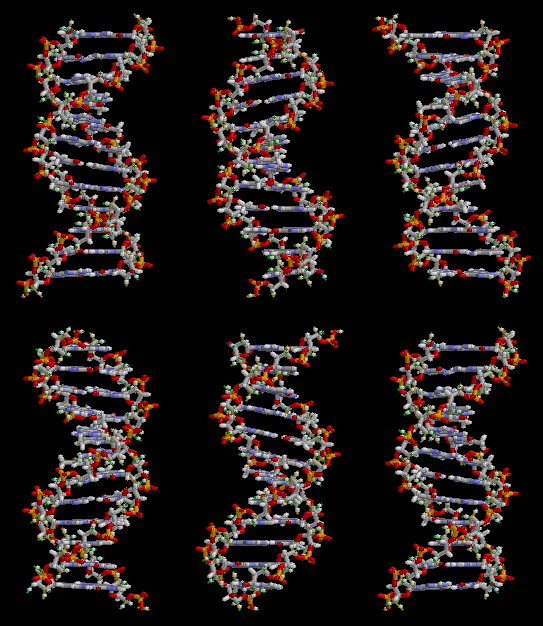
The Storage Capacity of DNA

Computer users generate enormous amounts of digital data that has to be stored for access as needed.
Scientists are hoping to revolutionize current methods for digital storage by imitating a far superior data - storage system found in nature. DNA (DeoxyriboNucleic Acid).

Consider : DNA, found in living cells, holds billions of pieces of biological information. 
"We can extract it from bones of woolly mammoths... and make sense of it," says Nick Goldman of the European Bioinformatics Institute.
"It's also incredibly small, dense, and does not need any power for storage, so shipping and keeping it is easy."
Could DNA store man - made data? Researchers say yes!

Scientists have synthesized DNA with encoded text, images, and audio files, much as digital media stores data.
The researchers were later able to decode the stored information with 100% accuracy.
Scientists believe that in time, using this method, 0.04 ounce (1 g) of artificial DNA could store the data of some 3,000,000 Compact Discs, and that all this information could be preserved for hundreds of years.
Potentially, this system could store the whole world's digital archive.
DNA has thus been dubbed "the ultimate hard drive."

What do you think? Could the storage capacity of DNA have come about by evolution? Or was it designed?

                                                                                            Source : Awake! DECEMBER 2013


Thursday, October 17, 2013

Human Relations : Part # 16 - Do you hear well?


Do you hear well?

According to my Canadian Students' Dictionary, to hear means to listen to attentively.

A failure to listen may cost your organization to lose monies. 
Two examples of how are : 

  • A draftsman who doesn't hear the architect tell him to make an important change in the blueprints may cause the loss of thousands of dollars, because the specifications are incorrect.
  • A salesperson who fails to hear the message from the client about keeping an important delivery date, and as the result misses the date, may lose not only the sale, but maybe one of your organization's most valuable clients too.
Employees should test whether or not they are good listeners at their workplace, by asking themselves these questions such as : 
  • Does my boss, or supervisor have to "fight" to get my attention?
  • Do I find myself thinking overtly about something else in the moment my boss, or supervisor begins verbally instructing me?
  • Do I feel that my boss, or supervisor insults me by constantly repeating the message / instructions ?
  • Do I always find that I must go back to ask my boss, or supervisor to repeat their messages / instructions?
  • Do I always feel confused about the messages / instructions given to me from my boss, or supervisor to do the job?
If an employee can definitely answer "no" to all of these questions, she / he is a good listener!
If not, she / he should strive harder to improve their listening skills.


Thursday, October 10, 2013

Study examines mental health in the workplace.


Training and return - to - work strategies needed.

     Organizations across Canada need to establish graduated return - to - work strategies, and other accommodations to aid employees who return to work after being treated for depression. 
This recommendation is part of a series of conclusions in a new Conference Board report, 
Depression in the Workplace : Insights from employees and supervisors, published recently.

     The new survey of employees, and supervisors found that after a work absence due to depression, two - thirds of employees who return have difficulties concentrating, remembering things, making decisions, and performing tasks - even after being medically cleared to return to work.

    According to the report, the specific strategies, and accommodations required will depend on the individual's circumstances, but might include reducing distractions to improve concentration, or providing minutes of meetings to assist with memory, and follow - up tasks.

     "Individuals who experience depression can show a significant decline in their work productivity and problems can arise even years after the period of depression. This has a significant impact for employers in terms of lost productivity," said Louise Chenier, senior research associate. "It's important to stress that once an accommodation measure has been identified and implemented successfully, the employee should be treated like all other employees. The temptation is to lower expectations. This approach can lead to inequities between employees and perceptions of unfairness." 

HIGHLIGHTS
  • In Canada, approximately 16 percent of women, and 11 percent of men will experience a major depression in their lifetimes, according to Health Canada.
  • Absenteeism is one factor associated with lost productivity, but a more critical factor is presenteeism - where an individual is working but not fully productive.
  • Managers need training to recognize the signs and symptoms of mental health issues, and ensure employees receive the support required.
     The results are based on a Conference Board survey of 2,004 individuals (including 727 front - line supervisors), conducted between Feb. 18 and Mar. 5, 2013

     In all, 147 respondents had taken either a short, or long - term leave of absence from work due to depression.

     The overall study results align with other research showing that individuals experiencing depression often continue to suffer from cognitive symptoms even after treatment.

     The findings of this study will be presented on Oct. 30th at the Conference Board's Wellness and Sustainable Health Care Summit in Toronto. Additional research on wellness and workplace health will be will be presented at Disability Management and Benefits 2013 : Driving Productivity with effective Workplace Practices on Oct. 28th, and 29th, also in Toronto.

     Funding for this research was provided by Lundbeck Canada Inc.